

Research & Development
Research & Development
6
Laboratories
650+
Patents
10%
Proportion of PhDs
69%
Proportion of Master's Degree Holders
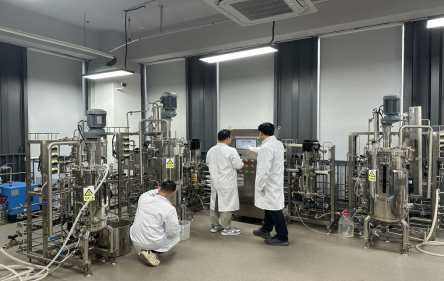
CMIT conducts joint R&D with the Shenzhen Institute of Advanced Technology, Chinese Academy of Sciences. By developing key core technologies in the green conversion of CO₂, the two sides have realized the development and large-scale demonstration of technologies that convert CO₂ into high-value-added fuels, chemicals and protein feed.At present, relying on advanced fermentation technologies, the Company has built cell factories covering 12 product lines in bulk chemicals as well as flavor and fragrance sectors. Among them, six cell factories for mannitol, mevalonic acid, protocatechuic acid, geraniol, geranyl acetate and vanillin glycoside have achieved the highest yields reported in public literature.
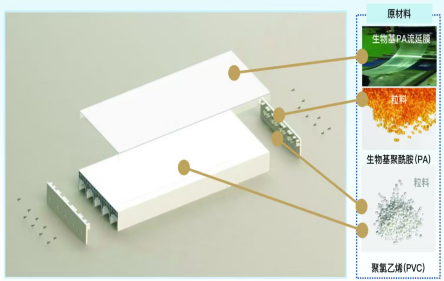
Novel polymer-based composite templates are fabricated via interfacial composite technology with bio-based raw materials as the core substrate. They feature multiple advantages including light weight, high strength, demoulding-agent free application, convenient construction and recycle ability.Adopting a general modular design, our products share unified modulus with the aluminum alloy formwork system. The reinforcement system meets the high standard of four inner supports and five outer supports. With universal accessories and cross-scenario compatibility, the templates are applicable to residential buildings, basements, factory plants and other construction scenarios.At present, CMIT has established a near-full-cycle management and control system. On the basis of national and industrial standards, the Company has led the formulation of two association standards, providing standardized and high-performance formwork solutions for the green and low-carbon development of construction industrialization.
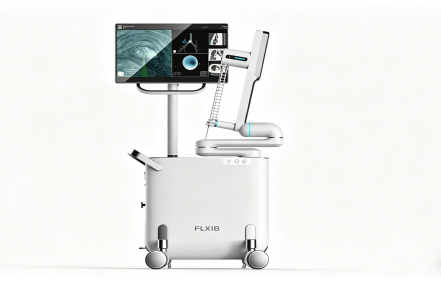
Jointly developed with the Shenzhen Institute of Artificial Intelligence and Robotics, the project targets China’s three major high-incidence lethal diseases: respiratory diseases, cerebrovascular diseases and malignant tumors. Adopting novel flexible body and micro-nano robotics technologies, it enables flexible access to target regions and precise lesion manipulation. Combined with multi-modal image navigation and heterogeneous master-slave control technologies, it establishes a new type of robotic auxiliary micro-noninvasive interventional diagnosis and treatment device system, and builds demonstration applications for industrial deployment.
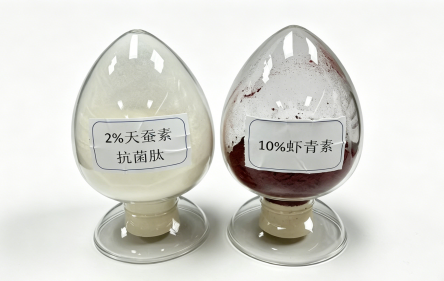
The project on the production of astaxanthin and cecropin antimicrobial peptides using synthetic biology technology is jointly developed by CMIT and the research team led by Professor Liu Meixing from the College of Life Sciences, Zhejiang University.Adopting synthetic biology as an alternative to traditional chemical synthesis and natural extraction methods, the project produces astaxanthin and cecropin antimicrobial peptides, featuring outstanding advantages in economic efficiency, environmental friendliness and production efficiency.Astaxanthin, known as "super vitamin E", delivers powerful antioxidant effects, while cecropin antimicrobial peptides can serve as a viable substitute for conventional antibiotics.With promising prospects for achievement transformation, the technology can be applied to manufacture bulk feed products as well as high-value-added end products for health care and cosmetics. It is expected to capture considerable market share by virtue of higher potency and lower production costs.
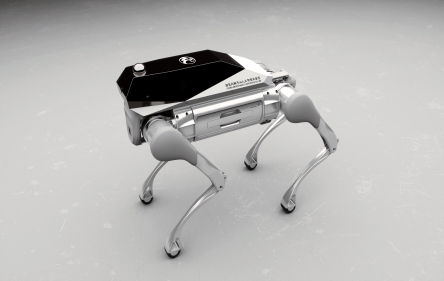
Independently developed by China Merchants Lion Rock AILab, this product is tailor-made for modern property management scenarios. It supports 24-hour autonomous patrol within parks and accurately covers monitoring blind spots. Deployed at lobby entrances and exits, it enables intelligent on-duty service and facial recognition. It assists security staff in conducting night patrols and emergency response missions. Meanwhile, it serves as an innovative image showcase robot for important receptions and technology exhibitions, comprehensively upgrading the property’s safety management capability and technological image.
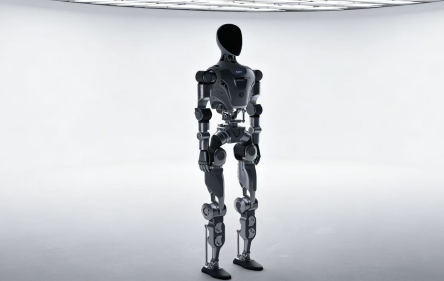
Independently developed by China Merchants Lion Rock AI Lab, this is an intelligent guidance robot tailor-designed for cultural museums and exhibition scenarios.Powered by a multimodal large model, the robot is equipped with autonomous navigation and smooth human-like gait mobility. It delivers accurate audio commentary, and enables open Q&A and in-depth topic interaction based on its built-in knowledge base. Supporting anthropomorphic interactions such as head rotation and gesture movements, it greatly enhances visitors’ immersive experience.
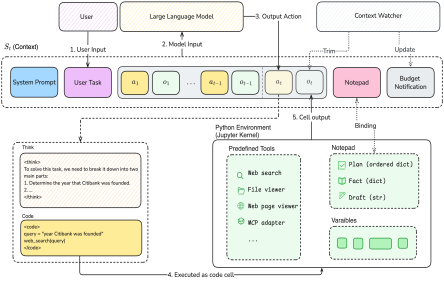
Developed and globally open-sourced by China Merchants Lion Rock AI Lab, LionRock-Zero is a proprietary intelligent agent built as a reinforcement learning training and inference system. It significantly cuts down manual intervention in agent reinforcement learning workflows, while resolving the heavy reliance of prevailing platforms on prompt engineering and intricate system orchestration. Empowering models with self-learning capabilities such as exploration, verification and memorization, the framework is set to open a new chapter of autonomous evolution in the R&D and application of intelligent agents, and fuel sustained advancement across artificial intelligence, particularly in the realm of Agentic AI.

CMIT has consistently aligned with China Merchants Group's strategic layout and approach for technological innovation amid its "Third Entrepreneurship" initiative. It is speeding up the development of the Sci-tech Innoation Industry Sector, vigorously advancing technological innovation, and forging an efficient "industry-university-research-application" collaborative innovation model—all while accelerating breakthroughs in a range of major industrial cutting-edge technologies, disruptive technologies, and key core technologies.

Address: 32/F, China Merchants Bank Shenzhen Branch Tower, No. 2016 Shennan Avenue, Futian District, Shenzhen, China Email:cmitzh@cmhk.com
备案号: 粤ICP备2025414552号CMIT @ Copyright 2024-2025. All rights reserved